




No products in the cart.
Buyer’s guide series · Part 04 of 9
The fifteen questions that separate a good composting machine supplier from a bad one, with what a solid answer sounds like and what a weak one means.
Written & reviewed byDevanshu Daga, Founder, The Green Machine Co. (ISB PGP; Six Sigma Black Belt)
Last updated19 October 2026
Reading time5 minutes
Take this list to every supplier meeting. What matters is not only the answers but how readily they come. A manufacturer with an engineering function answers most of these immediately. A trader deflects, generalises, or promises to check.
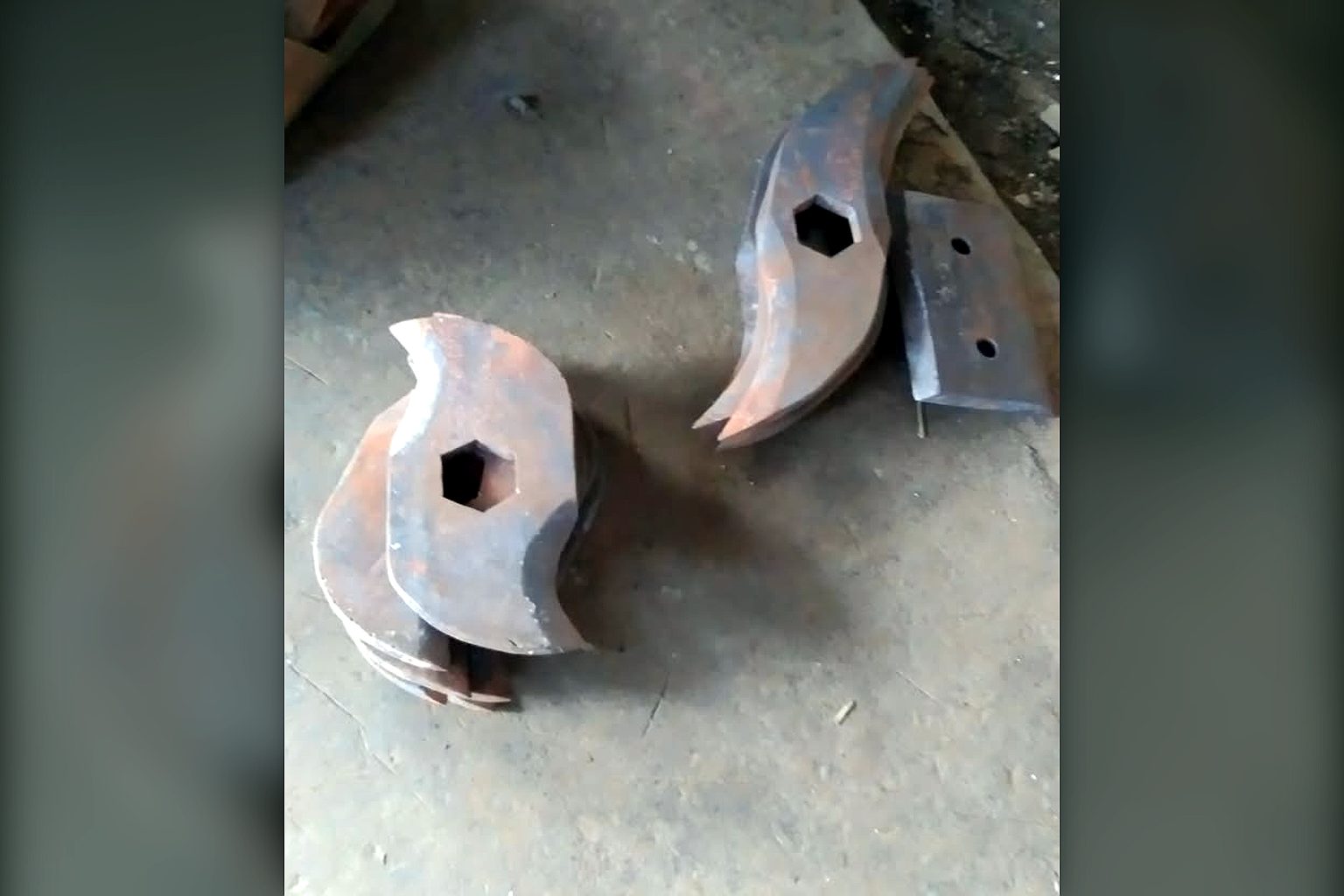
Under each question you will also find TGMC’s own answer, so you can hold us to the same standard you hold everyone else to.
Free download: 15-Question Buyer Checklist
All 15 questions on a printable form with space for three suppliers side by side, plus TGMC’s own answers. Take it to every supplier meeting.
About the Machine
1. What basis is the quoted capacity stated on, input mass or chamber fill, and at what moisture content?
“100 kg/day” is not a standardised claim. Different manufacturers measure it differently, which makes quotations non-comparable until you normalise them. A good answer is a specific basis, stated in writing on the quotation. A weak answer is “it’s 100 kg, standard.” Ask again.
TGMC’s answer: We rate capacity as kilograms of wet kitchen waste fed per day, weighed as it goes in, at normal Indian kitchen-waste moisture. Our models run from 25 kg to 2 tonnes a day, each load processed in a 4 to 6 hour cycle. Every quotation states the daily input, the batch size and the number of cycles a day.
2. What is the connected load and the running load, in kW?
Connected load determines your electrical connection and cabling. Running load determines your monthly bill. They are very different numbers and suppliers often quote only the flattering one. A good answer gives both figures in writing, with a breakdown by motor and heater.
TGMC’s answer: Every quotation states the connected load in kW, covering all motors and the heater, and the typical units used per day. For example, our 25 kg machine uses about 4 units (kWh) a day.
3. What is the material of construction, component by component?
“SS body” is not a specification. The chamber, the shaft, the paddles, the outer cladding and the frame may all be different grades. A good answer gives a grade against each component, plus a willingness to provide mill test certificates for your machine. A weak answer is “full stainless steel.” Ask which grade, for which part.
TGMC’s answer: The process vessel, every part that touches the waste, and the frame are SS 304, made from branded stainless sheet from mills such as Jindal Stainless. An IS 2062 mild steel frame with a protective coating is available on request. Mill test certificates for the stainless sheet are available on request.
4. What are the ratings of the motors and gearboxes, and are they branded, industrial-duty parts?
These are the components that fail, and branded, industrial-duty, locally available parts are the difference between a two-day repair and a two-month one. A good answer gives the kW of each motor, the gearbox type and its service factor, and confirms the parts are branded and available locally.
TGMC’s answer: Branded, industrial-duty IE2 three-phase motors rated for continuous duty, matched to branded industrial gearboxes chosen by motor power: worm drives on smaller machines, helical and planetary on larger ones. The quotation states the kW of each motor and the gearbox type.
5. How is the electrical panel protected from water, dust and pests?
This machine lives in a wet, wash-down environment, and on many sites rodents are a real risk. An unprotected panel is a recurring electrical fault waiting to happen. A good answer covers where the panel is mounted, how cable entries are sealed, and what keeps rodents out.
TGMC’s answer: The control panel is mounted away from the wash-down area, cable entries are sealed with glands, and mesh guards are fitted wherever rodents are present.
6. What is the total cycle time, including loading and discharge?
Cycle time quoted excluding load and discharge overstates real throughput. If you need two cycles a day, the difference decides whether that is possible.
TGMC’s answer: The machine cycle is 4 to 6 hours. Loading, discharge and cleaning take about 30 minutes of operator time a day on a 25 kg machine, and more on larger models.
7. What happens if the power fails mid-cycle, and is there a manual override if the controller fails?
This tests whether the design has been thought through or assembled. A machine with no manual fallback stops entirely when one component fails.
TGMC’s answer: The shredder and the agitator can each be run on their own from push buttons on the panel, without the controller. After a power cut the machine does not restart by itself, for the operator’s safety; the operator restarts the cycle. If power was off for more than about two hours, we advise running a fresh full cycle so the batch gets its complete heating time.
About the Process
8. How much bulking agent does it need, and what kind?
Sawdust or cocopeat is a recurring cost and a recurring procurement task. Quantities vary widely between designs, and it is rarely mentioned before purchase.
TGMC’s answer: Dry sawdust, or crushed air-dry garden waste, at 500 g to 2 kg per 25 kg of waste depending on how wet the waste is: about 1 kg for normal mixed kitchen waste. Every machine comes with a dosing card and a measuring scoop, and the operator is trained on both.
9. How much microbial culture does it consume, at what interval, and what does it cost?
Another recurring cost. Also worth asking whether the culture is proprietary. A machine that only runs on one supplier’s culture puts you in a weak position on price for a decade.
TGMC’s answer: A composting culture at about 1 to 2 grams per kg of waste. Bulk cultures cost about ₹100 to ₹200 per kg, so a 25 kg a day machine spends roughly ₹75 to ₹300 a month on culture.
10. Is the discharged material a finished soil amendment or does it need curing, and what laboratory evidence supports that?
Machines genuinely differ here, and the answer determines how much space, handling and labour your site needs after the machine. What separates a real claim from a marketing one is test data. A good answer is a clear statement either way, plus a laboratory report you can read: if curing is needed, guidance on how long and how much space; if it is not needed, maturity test results that demonstrate it, not just an NPK analysis. A weak answer is a claim of ready-to-use compost with no report behind it.
TGMC’s answer: Usually no separate curing is needed. We aim to discharge at 15 to 20% moisture, and in our NABL-accredited laboratory record every lot discharged below about 19% moisture passed the maturity benchmark (C:N under 20:1). A short curing period of one to two weeks in a covered bin is advised when the batch comes out wet, for example after an interrupted cycle; when the waste is mostly garden, coconut or woody material; when the output will be used on vegetables eaten raw; or when a lab test shows C:N above 20:1. When curing is needed, allow covered space for about two weeks of output and about 10 minutes a day to turn it.
11. What can’t go into the machine?
An unhesitating, specific list is a sign of real operating experience. A vague “anything organic” is not.
TGMC’s answer: Plastics, metal, glass, large bones, shells, coconut husk unless shredded and in small amounts, sanitary waste, medicines, chemicals and large amounts of cooking oil.
About Delivery and After
12. What are the complete site requirements?
Footprint, working clearance, floor loading, access route dimensions, power, water, drainage and exhaust routing. Site readiness delays more installations than manufacturing does. Get this before dispatch, not on delivery day. Our site readiness checklist covers all of it.
TGMC’s answer: Our Site Readiness Checklist covers space, access, floor, power, water, drainage, exhaust and output storage, and can be downloaded as a printable PDF.
13. Where is the nearest service engineer, what is the committed response time, and is it written into the contract?
A verbal assurance about service is worth nothing in year four. It either appears in the agreement or it does not exist.
TGMC’s answer: We support every machine as if our office were next door. Every machine ships with a spares kit and a trained operator. Faults are first diagnosed by video call, usually the same working day; spares are couriered the next working day; a local electrician is briefed at installation; and an engineer visits when a fault cannot be fixed remotely.
14. What documentation comes with the machine?
You should receive a general arrangement drawing, an electrical schematic, an O&M manual and a spare parts list with part numbers. A company that designs its own equipment produces these routinely. A pure trader cannot produce them at all.
TGMC’s answer: Every machine comes with an operation and maintenance manual, the electrical wiring drawing and a spare-parts list with part numbers.
15. What does the warranty exclude?
Read the exclusions, not the headline period. Common carve-outs: wear parts, blades, seals, anything attributed to improper use, and anything where the customer used a third-party culture or bulking agent. Ask specifically whether the gearbox and motor are covered and for how long.
TGMC’s answer: 12 months on manufacturing defects. Not covered: wear parts (cutters, seals and gaskets, belts, castor wheels); damage from non-segregated waste or foreign objects; voltage problems where the site has no protection; flood, fire or lightning; repairs or changes by anyone not authorised by TGMC; use outside the manual; consumables such as culture and bulking agent; site civil and electrical works; and rodent damage where the cable glands or guards have been removed or left open.
Three Questions to Ask People Who Are Not the Supplier
Ask a reference customer what has broken, how long the repair took, and whether they would buy from the same supplier again.
Ask to visit a site commissioned at least three years ago. Anyone can show you a new machine. A three-year-old machine shows you corrosion, wear, and whether the service relationship survived.
Ask your own operator or housekeeping supervisor whether they can realistically add this to their daily routine, and listen to the answer. A machine nobody has time to run is a machine that stops running.
How to Read the Answers
You are not looking for perfect answers. You are looking for specific ones.
A supplier who states the motor and gearbox ratings and the service factor, and hands you a spares list with part numbers, is telling you they know their own machine. A supplier who says “we use only the best quality components” is telling you they do not.
Similarly, a supplier who volunteers a limitation, that woody waste needs the shredder option, that your segregation will have to improve, that your site will need better exhaust routing, is more trustworthy than one for whom everything is fine and nothing is a problem. In a ten-year relationship, the ability to hear bad news early is worth more than a smooth sales process.
Frequently Asked Questions
What is the most important question to ask?
Question 1, the basis of the capacity figure. Until quotations are normalised on the same basis, you are not comparing machines, you are comparing labels.
Should I get three quotations?
Yes, but normalise them first using questions 1 to 7. Three quotations compared on price alone will simply select the thinnest specification.
Is the cheapest machine ever the right choice?
Occasionally, when the specification genuinely matches and the service reach is real. Usually the price gap is explained by items in this list, and the difference costs more than the initial saving well before payback.
Next Steps
For supplier-side due diligence in more depth, see how to vet an OWC manufacturer. For reading a specification sheet line by line, see OWC specifications decoded. The full picture is in the complete buyer’s guide.
Next step
Know your daily wet-waste figure? We will check it against a machine size.
A TGMC engineer walks your site, measures the access route and the power supply, and puts the kg-per-day basis in writing before any quotation is issued.
Or call +91 90737 96770 · info@tgmc.co.in
Written and technically reviewed by Devanshu Daga, Founder, The Green Machine Co., Kolkata (ISB PGP; Six Sigma Black Belt). Last updated 19 October 2026.
Continue the series
Next in the buyer’s guide
05 · SpecificationsOWC Specifications DecodedEvery line explained, with a sheet for normalising two quotations.06 · MaterialsSS 304 vs SS 202 vs MS EpoxyThe grades, the service condition and a component-wise table.07 · Mistakes7 Mistakes Buyers MakeEach one worked through, and what it costs when it happens.