




No products in the cart.
Buyer’s guide series · Part 09 of 9
How to tell an engineering company from a badge, what documentation proves design capability, and the reference checks worth doing before you sign the order.
Written & reviewed byDevanshu Daga, Founder, The Green Machine Co. (ISB PGP; Six Sigma Black Belt)
Last updated19 October 2026
Reading time7 minutes
You are buying a ten-year relationship, not a machine. The equipment will need spares, service and somebody who understands why it was designed the way it was. In this market the supplier matters more than the specification, because a good supplier will fix a specification problem and a bad one will not fix anything.
The First Question: Who Owns the Design?
A substantial part of this market is badge engineering. A company takes orders, buys equipment somebody else designed, applies its own name and sells it. There is nothing wrong with a supplier who does not own a factory. Plenty of serious engineering companies have their machines fabricated by specialist shops, which is normal practice across capital equipment. What matters is who did the engineering.
The distinction is between a company that drew the machine, selected the drive, specified the materials and remains accountable for all three, and a company that ordered a machine from a catalogue and printed a label. The first can tell you why the gearbox is the size it is. The second cannot, and in year four that is the difference between a repair and an argument.
Separating them is not difficult if you ask the right things.
Ask who designed the machine, and ask to speak to them. A company with an engineering function will usually be pleased to put you in front of it. A reseller routes you back to sales. This single question does more work than any other on this page.
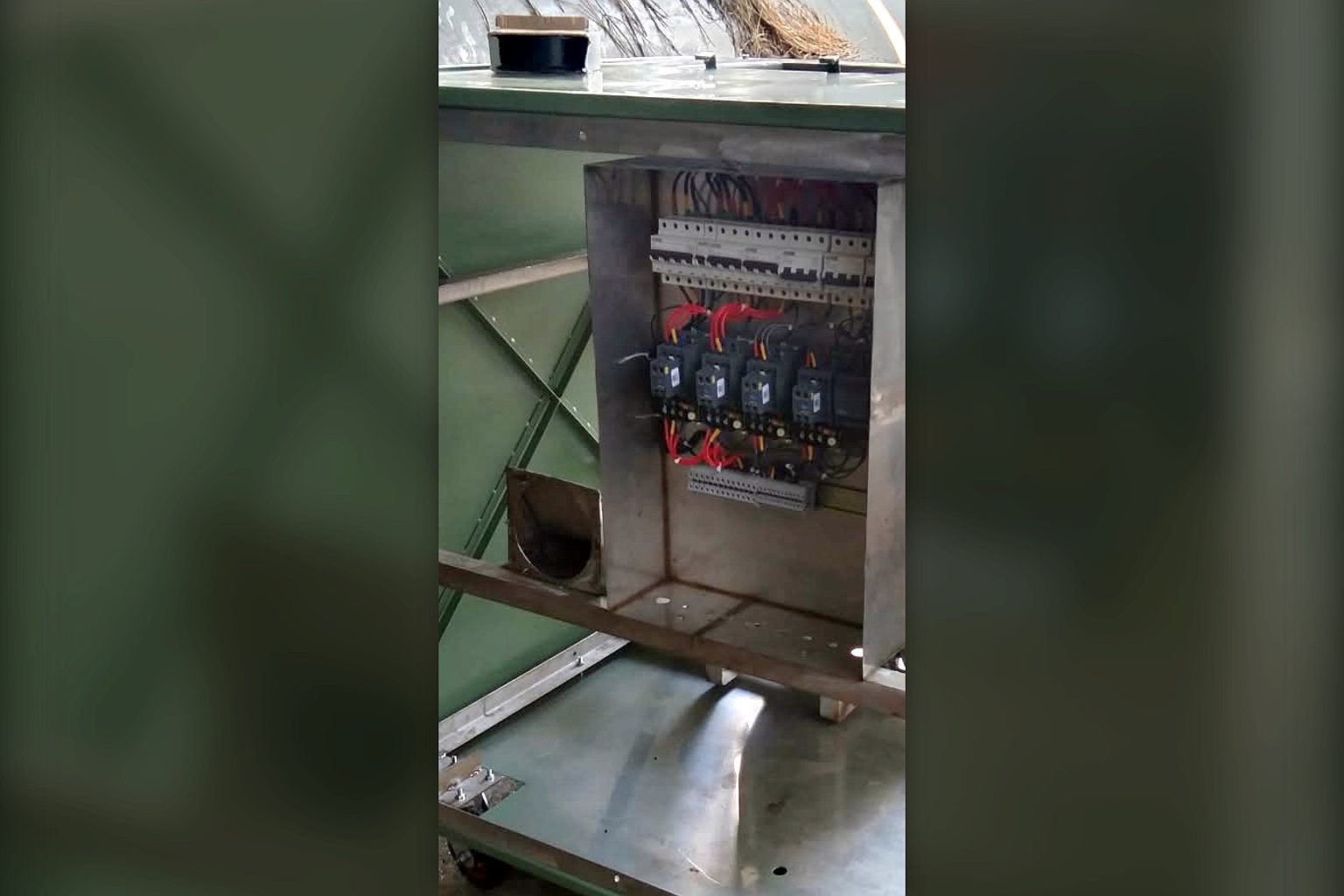
Ask for the general arrangement drawing and the electrical schematic. These exist as a matter of course in a company that designs its own equipment. A reseller either cannot produce them or produces something obviously borrowed from elsewhere.
Ask a “why” question about a design decision. Why that gearbox, why that agitator geometry, why that shaft seal arrangement. An engineer answers with reasoning. A reseller answers with a claim.
Ask what has changed on the machine in the last three years. A company that owns its design improves it, and can tell you what it changed and why, usually because something failed and they fixed it. A design that has never changed has either never been examined or is not theirs.
Ask to see machines being built. Whether the shop belongs to the supplier or to a fabricator working to their drawings, you should be able to see work in progress and see the drawings it is being built against. What you are testing is whether the supplier controls the build, not whether they own the building. A supplier who cannot arrange it at all is telling you something.
Documentation as Evidence
Documentation is the cheapest and most reliable proxy for engineering capability, because it cannot be produced retrospectively at short notice.
Ask what comes with the machine:
- General arrangement drawing with dimensions, weights and service clearances
- Electrical schematic and panel layout
- O&M manual specific to the model, not a generic booklet
- Spare parts list with part numbers, identifying which are standard catalogue items
- Mill test certificates for the plate used in your machine
- Test or commissioning report with recorded parameters
- Warranty terms with the exclusions written out
A supplier who provides all of this is running a process. A supplier who provides a brochure and an invoice is running a trade. The spare parts list with part numbers is the single most revealing item, because producing it requires the supplier to know their own bill of materials.
Service Reach
Ask three specific questions and get the answers into the contract, not the conversation.
Where is the nearest service engineer to my site? A city name and a distance, not a claim of national coverage.
What is the committed response time for a breakdown, and is it in the agreement? A verbal assurance about service has no value in year four when the person who gave it has changed jobs.
How many machines do you have running within, say, 200 km of my site? This determines whether a service visit is a routine trip or a special expedition. A supplier with one machine in your region will service it, once, expensively, eventually.
If you are in eastern India this question carries more weight than it does in the west or south, because a good many suppliers in this market treat the east as an outstation region. Ask specifically.
Spares
Two things to establish.
Are the wear parts standard or proprietary? Bearings, seals, belts and blades that are standard catalogue items can be sourced anywhere at market price. Proprietary parts put you in a single-supplier relationship for a decade, at whatever price is set then.
What is the quoted lead time for the three most likely failures: gearbox, shaft seal and shredder blades? Ask for each specifically. A vague “we keep everything in stock” is not an answer. Ask what happens if the part is not in stock.
Also worth asking what happens to spares availability if the company discontinues the model. A supplier with a considered answer has thought about its installed base.
Reference Sites, Done Properly
Every supplier will give you references. The way to make them useful is to control the selection.
Ask for the oldest installation they have, and go and see it. Anyone can show you a new machine. An older machine shows you corrosion at the welds, wear on the paddles, the condition of the seals, and whether the service relationship survived. If a supplier’s oldest machine is very recent, that is not automatically disqualifying, but it does mean nobody yet knows how their machine ages, and you should price that uncertainty into the decision rather than ignore it.
Ask for a site with a waste profile like yours, not just a similar capacity. A machine handling dry canteen waste tells you little about how it will handle a wet seafood kitchen.
Visit it yourself if the purchase is significant. Look at the machine, but also look at whether it is being used. A clean, warm, actively running machine with a maintenance log beside it tells you more than any brochure.
Speak to the operator, not only the manager. The manager knows what was promised. The operator knows what happens on a Tuesday morning.
Ask the reference customer four questions: what has broken and how long did each repair take; how responsive were they after the warranty period ended; is the machine still processing the volume it was sold for; and would you buy from them again.
The second is the important one. Service behaviour during warranty tells you nothing, because everyone performs while they are contractually exposed. What matters is year four.
Commercial and Structural Checks
Proportionate to the size of the purchase:
- How long has the company been operating, and under this name?
- Financial standing. For a large order a basic check is reasonable, because your warranty is only as good as the company’s continued existence.
- Is the entity you are contracting with the entity that builds the machine? Sometimes they are different companies within a group, which affects who is liable for what.
- GST registration, and their standing on any procurement platform you may later buy through.
- Do they hold, or have they held, orders from institutional buyers? Institutional procurement involves documentation and technical scrutiny that a purely retail supplier may never have faced.
Warning Signs
- No drawings, or drawings that appear to belong to another company
- No named engineer, only sales contacts
- Reluctance to let you see a machine being built, or the drawings it is built against
- A quotation materially cheaper than every other with no specification explanation
- Capacity claims stated without a basis, and reluctance to state one in writing
- Performance claims about cycle time, output maturity or volume reduction offered without a laboratory report
- Service coverage described only in national terms, with no engineer location or response time
- Warranty terms vague about exclusions
- Pressure to close before you have completed site checks
None of these is individually disqualifying. Three or more together is a pattern.
Frequently Asked Questions
How can I tell an engineering company from a reseller?
Ask who designed the machine and ask to speak to them. Ask for the general arrangement drawing, the electrical schematic and a spare parts list with part numbers. Ask why a specific component was chosen. A reseller struggles with all four.
Does it matter if the supplier does not own the factory?
Less than it is often made to sound. Fabrication is routinely subcontracted across capital equipment, and a specialist shop working to a good drawing produces a good machine. What matters is who owns the drawing, who inspects the work and who is accountable when something fails.
How important is service location?
Very. Ask for the nearest engineer’s city, the committed response time in the contract, and how many machines the supplier already runs in your region.
What documentation should come with the machine?
GA drawing, electrical schematic, model-specific O&M manual, spare parts list with part numbers, mill test certificates and a commissioning report.
Should I visit a reference site?
Yes, for any significant purchase, and specifically the oldest one the supplier has, with a waste profile like yours.
Next Steps
To take these checks into a supplier meeting, use the 15 questions to ask before you buy. For reading the specification sheet itself, see OWC specifications decoded. The whole decision is covered in the complete buyer’s guide.
Next step
Know your daily wet-waste figure? We will check it against a machine size.
A TGMC engineer walks your site, measures the access route and the power supply, and puts the kg-per-day basis in writing before any quotation is issued.
Or call +91 90737 96770 · info@tgmc.co.in
Written and technically reviewed by Devanshu Daga, Founder, The Green Machine Co., Kolkata (ISB PGP; Six Sigma Black Belt). Last updated 19 October 2026.
Continue the series
Next in the buyer’s guide
01 · BasicsWhat Is an Organic Waste Converter?The plain-English version: what the machine does, and what it is not.02 · SizingHow to Size a Composting MachineThe seven-day method, an audit sheet and a worked example.03 · AutomationFully Automatic vs Semi-Automatic OWCWhich one wins depends on the operator hours you actually have.