




No products in the cart.
Buyer’s guide series · Part 02 of 9
A seven-day method for calculating your wet waste in kg/day, plus the peak and headroom adjustments that decide which composting machine size you need.
Written & reviewed byDevanshu Daga, Founder, The Green Machine Co. (ISB PGP; Six Sigma Black Belt)
Last updated19 October 2026
Reading time6 minutes
Capacity is the first number you decide and the one every other decision follows from. It sets the price, the footprint, the power connection, the operator time and the running cost. Get it wrong in either direction and you pay for it every day for a decade.
This is how to arrive at the number properly.
Why Suppliers’ Quick Estimates Go Wrong
Most sizing in this market happens in a phone call. Somebody says “we’re a 90-room hotel” and a number comes back. That estimate is built from a per-unit rule of thumb, and rules of thumb carry an error band of perhaps 30 to 40% in either direction, because they cannot know your occupancy pattern, your banquet load, your cuisine, your buffet wastage, or how much of your waste is already leaving by another route.
An error band of 30% on a machine you will operate for ten years is not acceptable. Measure first, and use the rule of thumb only to check your measurement.
Step 1: Run a Seven-Day Waste Audit
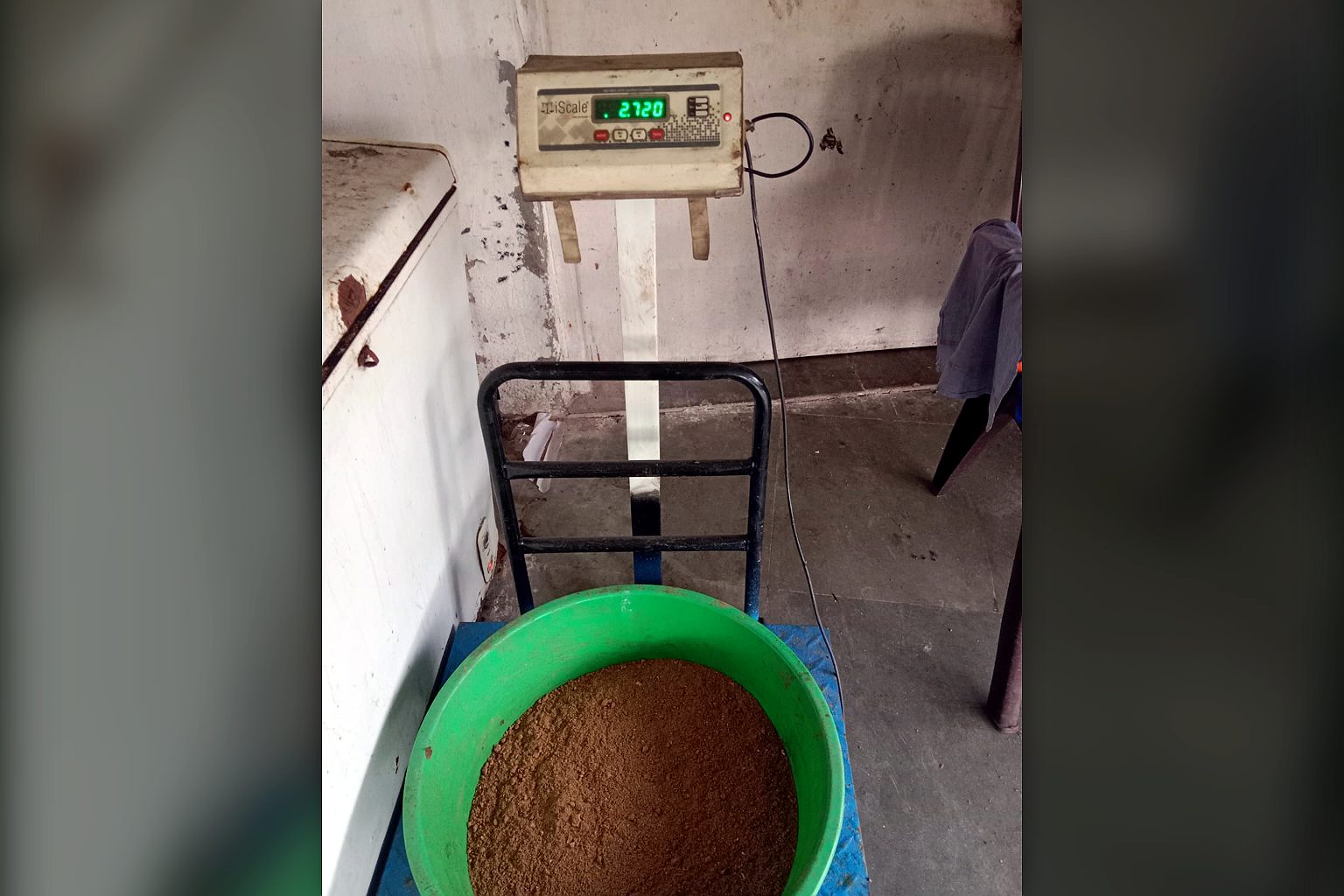
You need a platform weighing scale, a logbook or printed sheet, and one person made responsible.
Choose the right seven days. Include at least one weekend. If you are a hotel or banquet venue, include at least one event day. If you are a housing society, avoid a festival week unless festival weeks are frequent enough to matter. Avoid holiday shutdowns and weeks with unusual occupancy in either direction.
Weigh at the point of generation, before anything leaves. Put the scale where the bins are consolidated, not at the gate. Waste that never reaches the gate is exactly what gets missed.
Log wet waste separately from dry. Only the wet fraction goes into the machine. If your segregation is currently poor, weigh the mixed waste and estimate the wet fraction, then note that your figure is provisional until segregation improves. It will improve after the machine arrives, which usually increases the wet stream.
Record source-wise if you can. Kitchen prep waste, plate waste, buffet returns, garden waste. This tells you not just how much but when it arrives, which matters for whether a batch or continuous machine suits you.
| Day | Kitchen prep (kg) | Plate / buffet (kg) | Garden (kg) | Total wet (kg) | Notes |
|---|---|---|---|---|---|
| Monday | |||||
| Tuesday | |||||
| Wednesday | |||||
| Thursday | |||||
| Friday | |||||
| Saturday | |||||
| Sunday |
Free download: 7-Day Wet Waste Audit Sheet
A printable two-page sheet: the daily log, the peak and headroom working, and a cross-check against typical figures. Send us the completed sheet for a free capacity assessment.
Step 2: Cross-Check Against a Planning Norm
Take your seven-day average and compare it to what a per-unit rate would predict. If the two are within about 20% of each other, your measurement is sound. If they diverge sharply, investigate before proceeding.
The usual explanations are that waste is leaving by a route nobody counted, such as a staff canteen with its own bin, a contractor collecting cooking oil and vegetable waste separately, or kitchen staff taking waste home for livestock. Or your seven days were unrepresentative. Or the rule of thumb simply doesn’t fit your operation, because a vegetarian buffet and an à la carte seafood restaurant generate very different volumes per cover.
Typical wet-waste figures for cross-checking your own measurement
| Facility type | Measured | Typical wet waste |
|---|---|---|
| Business hotel | per occupied room per day | 1,000–1,500 g |
| Hotel with banquets | per occupied room per day | 2,000–4,000 g |
| Full-service restaurant | per cover served | 300–400 g |
| Quick-service restaurant | per cover served | 100–150 g |
| Housing society | per flat per day | 800–1,000 g |
| Corporate canteen | per meal served | 180–250 g |
| Hospital | per occupied bed per day | 400–600 g |
These are TGMC planning estimates for Indian sites, wet (compostable) waste only. Use them to check your own seven-day measurement, not to replace it.
Step 3: Size for the Peak, Not the Average
This is where most sizing errors are made.
A machine sized to your annual average will be overloaded on every day above average, which is roughly half your days, and specifically your busiest and most visible ones. An overloaded machine doesn’t fail dramatically. It fails quietly. The cycle doesn’t complete, output comes out wet and sour, odour starts, and within a few months somebody decides the machine doesn’t work.
Take your highest realistic day. Not your highest recorded day, and not your mean. For a hotel that usually means full occupancy plus a banquet. For a society, a festival weekend. For a canteen, the peak-strength shift.
Step 4: Add Headroom
Add 20 to 30% on top of the peak, for three reasons.
Segregation improves. Once a machine exists and someone is responsible for it, more of the wet stream actually reaches the wet bin. Sites routinely see measured wet waste rise after installation.
Business grows. You are buying a ten-year asset. Occupancy rises, covers increase, a new wing opens, more flats get occupied.
Moisture varies. A monsoon-season load of high-moisture waste occupies more of the machine’s working capacity than the same weight of drier waste.
One caution. Don’t over-apply headroom. A machine running at 30% of capacity every day is a machine you overpaid for, and in some designs it also runs less efficiently, because the biology works best when the chamber is properly charged.
A Worked Example
A hotel measures a seven-day average of 62 kg/day of wet waste. The busiest day in that week, a banquet Saturday, records 88 kg. Reviewing the year’s banquet calendar, the engineering team judges that a realistic peak, with full occupancy and a large event, is around 100 kg.
- Measured average: 62 kg/day
- Realistic peak: 100 kg/day
- Plus 25% headroom: 125 kg/day
- Machine sized at: 125 to 150 kg/day
Note what happened. The average of 62 would have pointed at a machine roughly half the size of the one they actually need. That is the entire argument for doing this properly.
What to Hand Your Supplier
Give them, in writing: the seven-day audit sheet with daily figures; your identified peak day and why; the headroom you have applied; the composition of the waste, including approximate proportions of kitchen prep, plate waste and garden waste, and anything unusual such as high coconut or citrus content; whether garden or woody waste is included, since that determines whether you need a shredder section; and when the waste arrives through the day.
Then ask them to confirm in writing what basis their quoted capacity is stated on, input mass or chamber fill, and at what moisture content. Two machines both labelled 100 kg/day can genuinely mean different things.
If a supplier gives you a machine size without asking for any of this, that tells you something useful about how the rest of the engagement will go.
Common Sizing Mistakes
Sizing on room count or flat count alone. Occupancy and behaviour vary far too much between comparable properties.
Counting waste already going to a contractor as solved. If you stop that contract when the machine arrives, that waste comes back to you.
Forgetting garden waste. Landscaping waste is seasonal, bulky and woody. It either needs a shredder section or a separate route.
Ignoring the output handling area. Machine capacity determines output volume, which determines how much space you need for it. If the machine discharges material that needs curing, that space is considerable: daily output multiplied by two to three weeks. If it discharges a finished soil amendment, you need storage until collection or application, which is far less. Establish which before you plan the space. TGMC’s composters complete their machine cycle in 4 to 6 hours.
Sizing to the budget instead of the waste. If the right machine is out of budget, the honest answers are to phase the purchase, reduce waste at source, or wait. Not to buy a machine that will be overloaded from day one.
Frequently Asked Questions
How do I calculate food waste per day for a hotel?
Weigh the wet waste at the point of consolidation for seven consecutive days including a weekend and an event day, then identify your realistic peak day and add 20 to 30% headroom.
Should I size on average or peak load?
Peak, always. A machine sized on the average is overloaded on roughly half your days.
What if my waste volume varies seasonally?
Size for the peak season. In low season a well-designed machine can run shorter or fewer cycles. An undersized machine has no equivalent option in peak season.
How much headroom should I add?
20 to 30% over your realistic peak covers growth, improved segregation and moisture variation without leaving you badly oversized.
Next Steps
Once you have a capacity figure, the composter machine range is organised by kg per day. For the full specification picture, see the complete buyer’s guide, and for reading a quotation line by line see OWC specifications decoded.
Next step
Have your seven-day figure? We will check it against a machine size.
A TGMC engineer walks your site, measures the access route and the power supply, and puts the kg-per-day basis in writing before any quotation is issued.
Or call +91 90737 96770 · info@tgmc.co.in
Written and technically reviewed by Devanshu Daga, Founder, The Green Machine Co., Kolkata (ISB PGP; Six Sigma Black Belt). Last updated 19 October 2026.
Continue the series
Next in the buyer’s guide
03 · AutomationFully Automatic vs Semi-Automatic OWCWhich one wins depends on the operator hours you actually have.04 · Buying15 Questions to Ask Before You Buy a Composting MachineThe list to take into the meeting, and the answers to listen for.05 · SpecificationsOWC Specifications DecodedEvery line explained, with a sheet for normalising two quotations.